Recycling sounds simple — until you're standing in front of three bins holding a greasy pizza box, unsure which one it belongs in. Kids run into this same confusion constantly, and getting it wrong at home is a much gentler place to learn than getting it wrong in front of a disappointed adult.
Sorting is the skill, not the intention
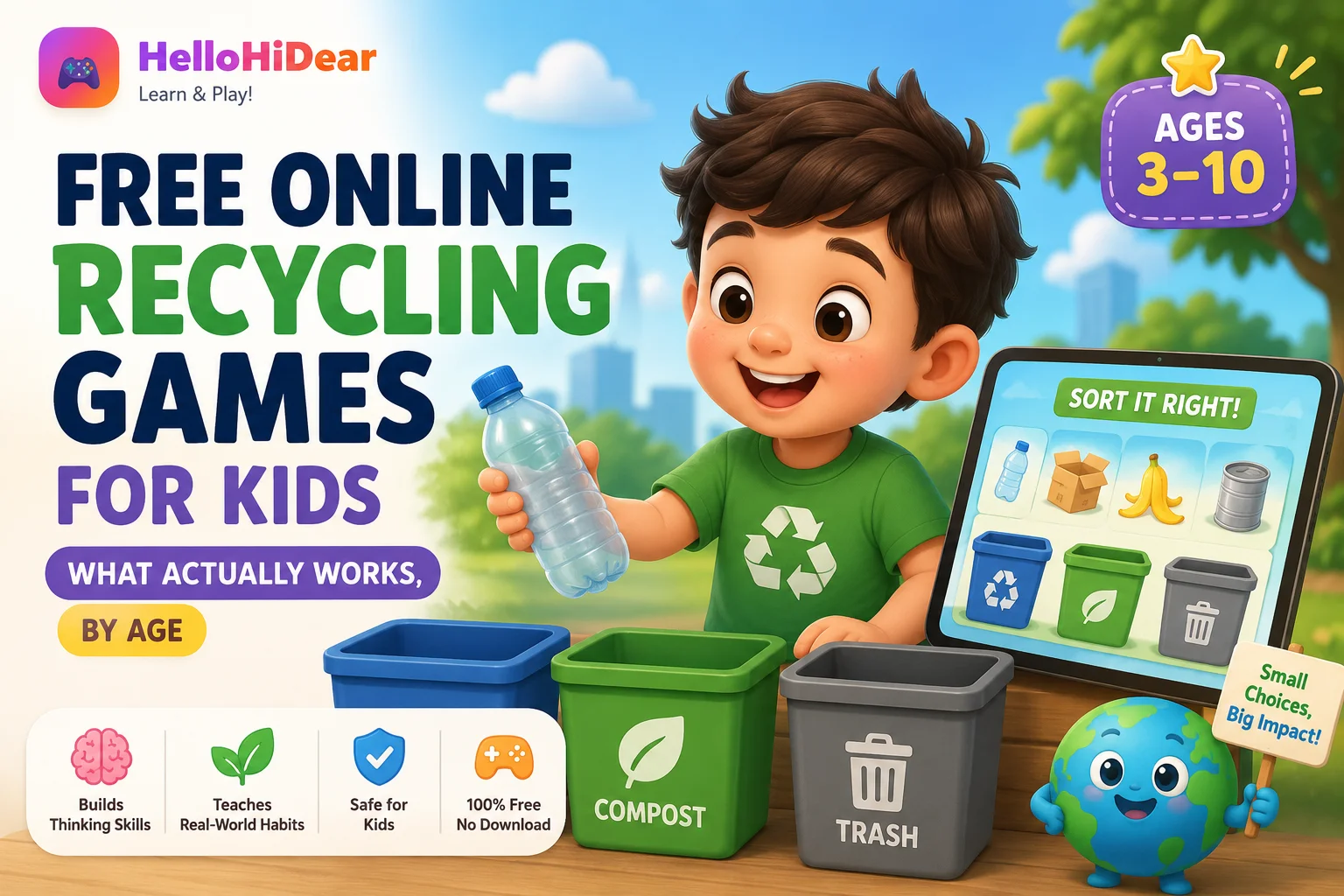
A game like Recycle Rover turns the actual sorting logic — paper here, plastic there, glass somewhere else — into quick, repeatable rounds with instant feedback, which builds the habit faster than a single explanation ever could.
Why this actually matters
The U.S. Environmental Protection Agency notes that contamination from incorrectly sorted recycling is one of the biggest obstacles recycling programs face — meaning teaching kids to sort correctly isn't just a nice values lesson, it has a real, measurable impact. National Geographic Education also offers extensive resources connecting everyday recycling habits to broader environmental science concepts kids find genuinely fascinating.
Bring it home
- Let your child sort the real recycling once a week, then double-check together.
- Talk through the "why" — where does a can actually go after the bin?
- Praise effort over perfection; sorting rules do vary by city.
Our Waste & Recycling category has more games covering composting, e-waste, and ocean cleanup.