🍃 Here's the short version
Recycling games are genuinely useful for practicing sorting skills — but the "age 18 months!" claims on most apps are more marketing than science. Toddlers can sort by one trait (like color) around age 2–3. Sorting real recycling means juggling several categories at once, which research says clicks more reliably around age 5–6. Pick a game that matches where your kid actually is, keep it around the American Academy of Pediatrics' one-hour daily guideline, and play along with them instead of handing over the tablet and walking off.
Just want the game? Jump straight to it →Why "recycling games for kids" is everywhere — and why the age labels are kind of made up
Search "recycling games for kids" and you'll get dozens of apps promising to teach an 18-month-old how to recycle. It's a nice promise. It's just not really how sorting skills work.
And here's the thing that never makes it into the App Store description: grown-ups don't sort recycling correctly either. This isn't a "kids are behind" problem. It's a genuinely hard task for households of every age.
32.1%
of U.S. household waste actually gets recycled or composted
Source: EPA
17–25%
of what goes in the recycling bin is actually the wrong stuff
Source: industry data
76%
of recyclable material never even makes it out of the house right
Source: Recycling Partnership, 2024
That's not because people don't care. It's because "recyclable vs. not" is a moving target — different rules in every city, weird exceptions everywhere. Researchers even have a name for the well-meaning guess: "wishcycling" — tossing something in the bin and just hoping it counts. If adults are wishcycling this often, we can be a lot more relaxed about what a four-year-old should already know.
So... what age can kids actually sort recycling?
This is the part most "educational" apps skip. Sorting isn't one skill you either have or don't — it builds in stages. Here's what the CDC and published child-development research actually show:
🧠 Sorting skill, by age (CDC + published research)
| Age | What's really going on | What kind of game fits |
|---|---|---|
| 2–3 yrs | CDC lists sorting by shape and color as a typical toddler milestone — just one trait at a time. | One sorting rule, two big obvious bins. That's it. |
| 3–4 yrs | Kids start grouping by less obvious traits and can explain why two things go together. | Simple recycle-vs-trash, with clear visual cues (bottle vs. apple core). |
| 4–5 yrs | "Cognitive flexibility" — switching rules mid-task — starts developing, but it's still shaky. | Three-category games become playable, maybe with a little help from you. |
| 5–6 yrs | A 2024 study found rule-switching ability really consolidates in this window. | Genuine multi-category sorting, tricky "gotcha" items included. |
| 7–10 yrs | Reasoning skills are solid now — the limit becomes knowledge, not brainpower. | Real-world nuance: material types, contamination, local rules. |
The bottom line: if an app has an 18-month-old sorting three different bins, it's probably working more like a cause-and-effect toy (tap, watch, repeat) than a true sorting exercise. That's still fine — just don't expect it to be teaching what the box promises.
Play it: a sorting game built for this exact skill
Once your kid is reliably sorting by one trait and starting to ask "why," a browser game is a low-stakes way to practice. You get to watch exactly which items trip them up — which tells you more than any age label ever could.
Landfill Lifter
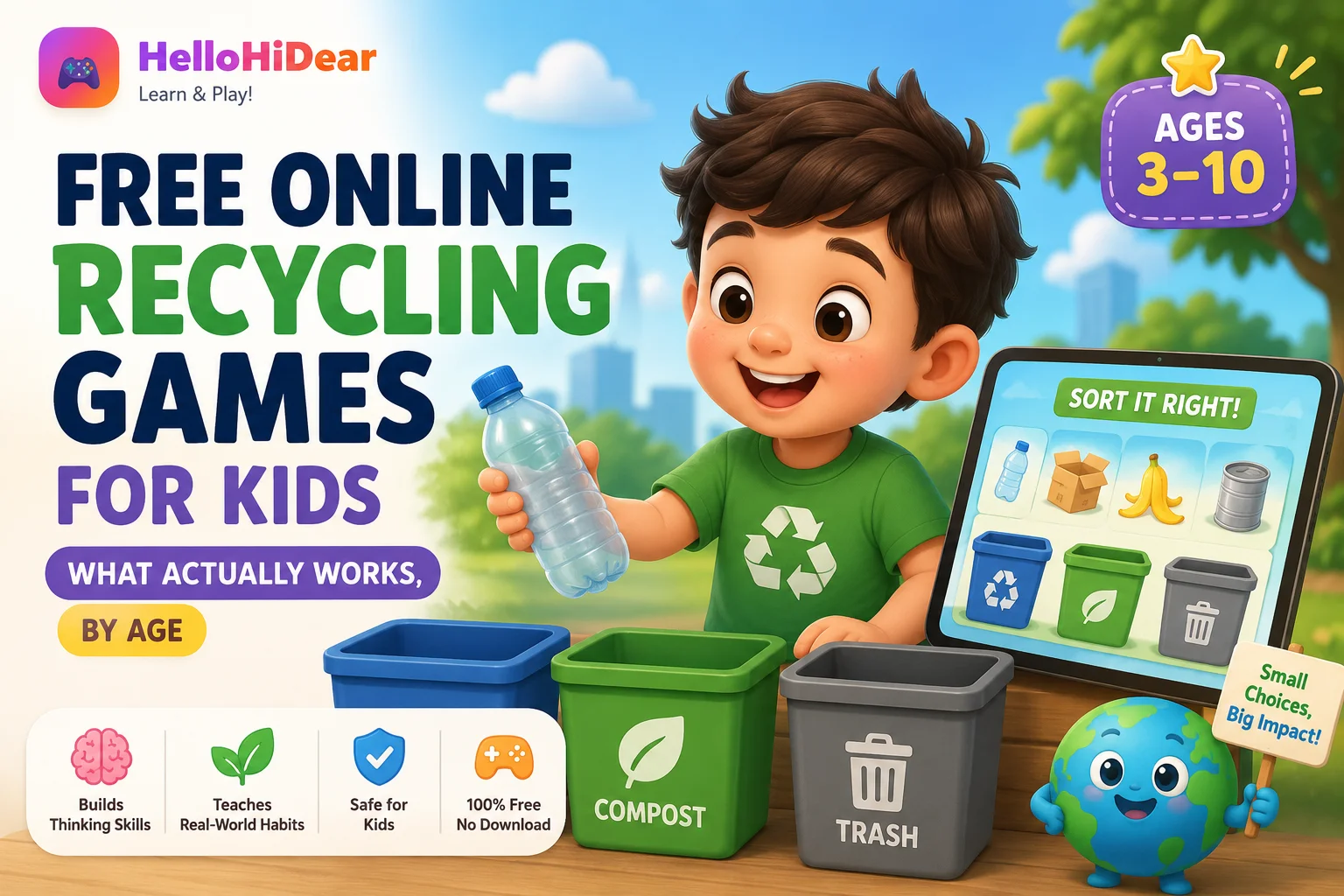
Your kid runs a crane at a construction site, crushing non-recyclable waste while keeping the soil healthy. It's a sorting game in disguise — every item means a real decision, which is exactly the practice that builds actual sorting skill.
Opens right in your browser. No account, no install, nothing to buy.
Got a younger kid still in the "one trait at a time" stage? Start smaller first. Electronic E-Waste uses a similar crane-and-sort setup, but isolates a single decision (battery first) before adding more categories — a better match for that earlier stage.
How long should they actually play? Here's what pediatricians say
The American Academy of Pediatrics doesn't give "educational" apps a pass — screen time is screen time, and it's the quality of interaction that matters most. Here's their current guidance, in plain terms:
- Under 18 months: Video chats with family, that's about it.
- 18–24 months: If you're introducing media, pick something great and watch together.
- Ages 2–5: Around one hour a day of good content, ideally with you nearby, talking about what's happening.
- Ages 6–10: Less about a strict clock, more about a family plan — balancing screens with sleep, activity, and offline time.
That "play together" part is the bit most recycling apps quietly skip, because it doesn't fit a "hand them the tablet and go make dinner" moment. But it's also where most of the real learning happens. A kid sorting alone is getting feedback from the game. A kid sorting with you asking why is actually building the reasoning underneath it.
💬 Try asking this while they play
- "Why do you think that one goes in the compost pile, not the trash?"
- "What would happen if we put a banana peel in our recycling bin at home?"
- "Can you find something in this room that'd go in the same bin as that?"
Game vs. worksheet vs. the real bin at home — an honest comparison
None of these wins outright. Each does something different, and most families end up combining two.
🔍 Three ways to practice sorting
| Method | Good for | Watch out for |
|---|---|---|
| Online game | Instant feedback, endless variety, zero real-world stakes while learning. | Doesn't automatically transfer to the messy, real-life bin. |
| Worksheet / printable | No screen at all, easy to reuse in a dry-erase sleeve. | No built-in feedback — mistakes can go uncorrected. |
| Your real bin, supervised | Directly builds the actual skill, teaches your city's specific rules. | Real recycling has genuinely confusing items — even adults mess it up. |
A sequence that tracks with the research above: let your kid build confidence with a low-stakes digital game first — getting it "wrong" there just means a quick animation, not a contaminated recycling load — then bring them to the real bin once they're consistently nailing the game.
3 recycling-game myths, busted
"This app teaches your 18-month-old to recycle."
CDC data just doesn't put multi-category sorting at that age. An 18-month-old tapping a screen is doing cause-and-effect play — great in its own right, just not the classification skill being advertised.
"If my kindergartner can't sort recycling right, something's wrong."
Research places reliable rule-switching — the skill three-plus category sorting needs — around ages 5–6. A kindergartner mixing up compost and recycling is right on track, not behind.
"Educational screen time doesn't really count as screen time."
The AAP's one-hour guideline for ages 2–5 applies to the good stuff too. "Educational" changes how valuable the time is, not whether it counts.
More free games, by age and skill
Sorting isn't the only skill worth building early. If this one clicked, these are good next steps:
Sorting · Ages 4–8
Electronic E-Waste
A gentler start — one decision at a time before more categories join in.
Sequencing · Ages 5–9
Biodegradable Bubble
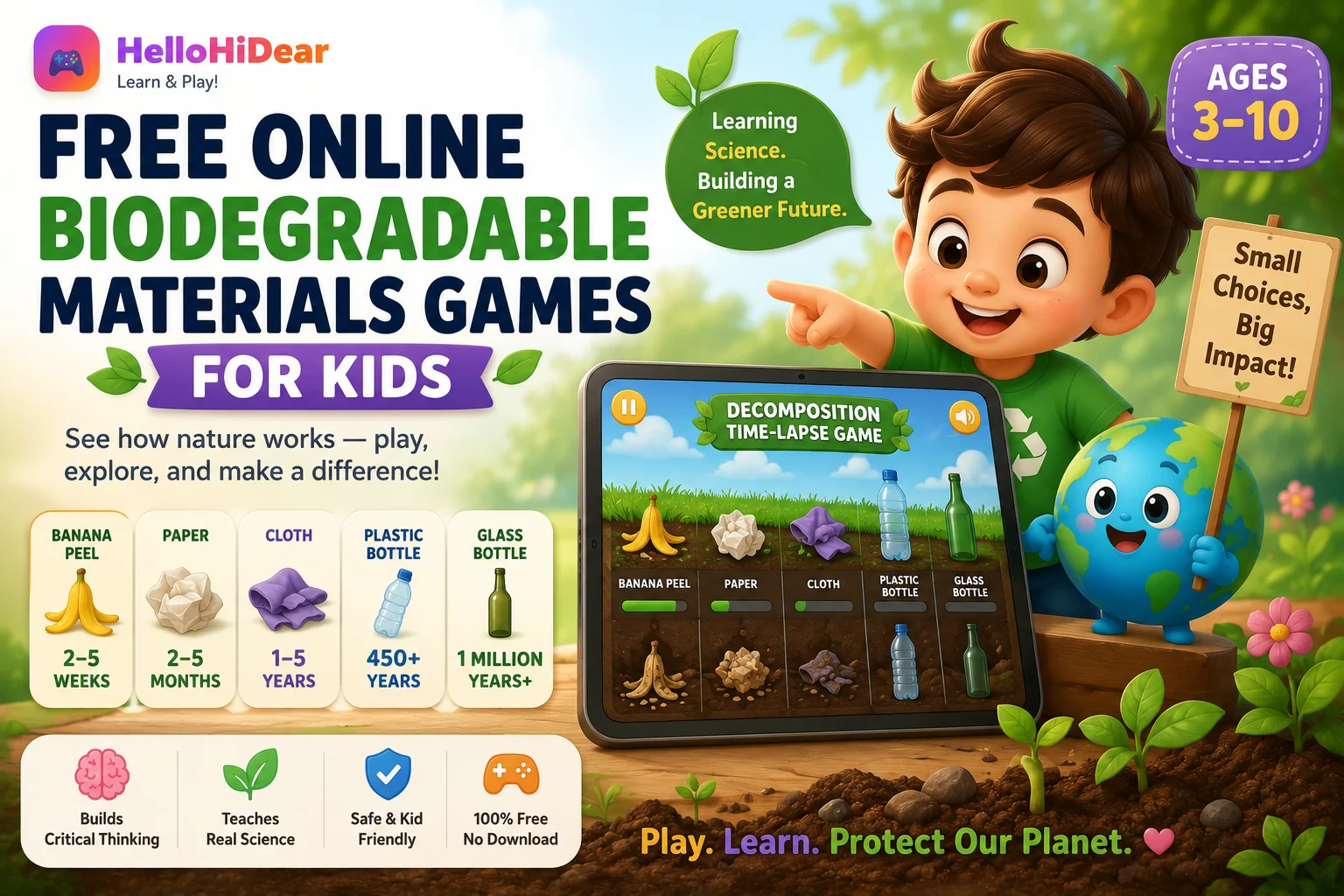
Kids rank materials fastest-to-slowest to decompose — sorting's cousin skill.
Observation · Ages 5–9
Reflection Reject
Spot-the-difference that builds the attention to detail sorting relies on.
Full library
Browse all free games
Every game, organized by age and the skill it actually builds.
Where these numbers came from
We didn't make any of this up — here's the receipts:
- CDC. "Positive Parenting Tips: Toddlers (2–3 years)." cdc.gov
- CDC. "Milestones by 4 Years," Learn the Signs. Act Early. cdc.gov
- EPA. "National Overview: Facts and Figures on Materials, Wastes and Recycling." epa.gov
- EPA. "America Recycles Day." epa.gov
- AAP, via HealthyChildren.org. "Where We Stand: Screen Time." healthychildren.org
- AAP, via HealthyChildren.org. "Healthy Digital Media Use Habits for Babies, Toddlers & Preschoolers." healthychildren.org
- NIH / PubMed Central. "Age Three: A Milestone in the Development of Cognitive Flexibility," Behavioral Sciences, 2024. ncbi.nlm.nih.gov
- Packaging Digest, citing The Recycling Partnership's 2024 State of Recycling report. packagingdigest.com